Not long ago, expanding operations overseas was viewed through a single, narrow lens: cost reduction. Companies moved back-office tasks across borders to optimize their bottom lines. Fast forward to 2026, and that paradigm has completely shattered.
Today, enterprise leaders aren’t just looking to save money—they are in a relentless race for elite technical talent, accelerated time-to-market, and continuous digital innovation. Enter the modern Global Capability Center (GCC).
No longer just a “captive offshore unit,” the 2026 GCC is a high-octane engine for enterprise growth. For businesses looking to scale their IT and operational infrastructure, establishing a GCC is now a competitive necessity. Here is why 2026 is the tipping point for global capability expansion.
The Global Race for AI and Advanced Tech Talent
As artificial intelligence, cloud architecture, and automation become deeply embedded in core business processes, the demand for specialized IT talent has vastly outpaced local supply in traditional tech hubs. Relying solely on local hiring in highly competitive markets stifles growth and inflates payrolls.
A strategic GCC allows you to tap into rich, global talent ecosystems. By setting up a footprint in emerging tech capitals, businesses can pipeline top-tier software engineers, data scientists, and cybersecurity experts who are ready to build the next generation of your products.
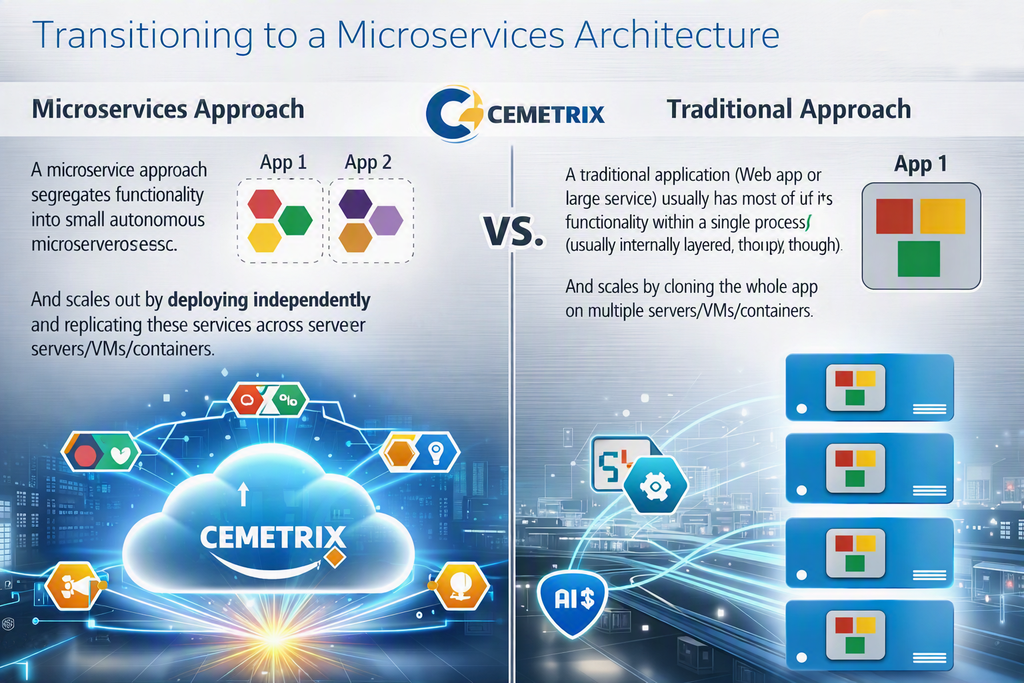
In any Engineering organisation, as the underlying business hits scale, as the number of team members grow, as the team drives towards operational excellence, transitioning to a microservices architecture seems inevitable. While the benefits of microservices architecture are common knowledge, it also comes with its unique set of challenges and complexities. When moving to microservices, the how and when can play a critical role in ensuring a smooth transition. In this talk, We will discuss some best practices in designing microservices and discuss out journey of transitioning to a microservices architecture.
Germany ICT Market — 2026 Overview
Germany’s ICT market reaches USD 213.49 billion in 2026, growing at a CAGR of 8.79%. Discover how Cemetrix — a multinational IT firm with EU presence — delivers ICT managed services, engineering, and staffing solutions to German and European enterprises.
Germany is Europe’s largest economy and one of the world’s most significant ICT markets. The Germany ICT market is valued at USD 213.49 billion in 2026 and is growing at a CAGR of 8.79% to reach USD 325.29 billion by 2031. Enterprise digitalisation, sovereign-cloud adoption, and accelerated AI rollouts are the structural forces driving this trajectory.
The IT services segment — covering consulting, integration, and managed services — is even more dynamic. The Germany IT Services market is valued at USD 86.43 billion in 2026, with managed security services forecast to expand at a 12.22% CAGR through 2031.
Let's Talk
Fill out the form below and our team will get back to you shortly.